Updated: November 7, 2008
The chart below shows a very interesting trend that we\\'ve seen over the last six months with savings account rates and certificate of deposit rates. Even though the Fed Funds Fund rate (the rates banks charge each other for overnight lending) has fallen since early April, savings and cd rates have actually risen. Note that the divergence started with the near-failure of Bear Stearns, which marked the beginning of an intense period of financial turmoil. Even as the Fed cut rates to 2%, savings account rates, 1 year CD rates, and 3 year cd rates rose. The increase in rates seems to have reached its peak in mid-October with the Fed takeover of Fannie Mae and Freddie Mac, the failure of Lehman Bros, and the government takeover of AIG. The passage of the bank bailout, officially known as the Treasury Asset Relief Program (TARP) as well as a swift cut in the Federal Funds rate from 2% to 1% has slightly thawed savings and cd rates and we are now starting to see a gradual decline in bank rates.
So, why did banks buck the interest rate trend and increase rates? The answer is that the banks were desperate to keep your cash and get more of it. Banks were deathly afraid of the kind of runs that brought down IndyMac, WaMu, Wachovia, and National City.
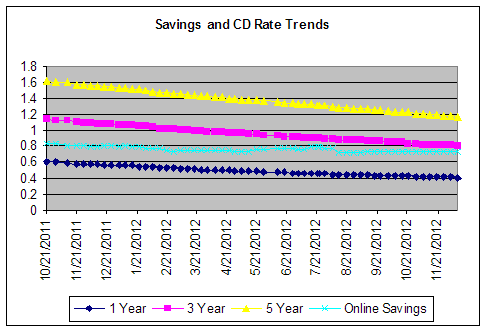
(Graph shows the average of the top 10 savings account rates, 1 year cd rates, and 3 year cd rates according to the BestCashCow rate tables)
Will the decrease in deposit rates continue? Yes for two reasons:
- If you look at the Fed Funds Futures (instruments that are based on future expectations of what the Fed will do with rates) they are giving high probabilities to a rate cut to either 0.75% or as low as 0.5% by January. Lower Fed Funds Rates will put pressure on bank deposit rates.
- Government efforts to support and recapitalize banks will take some of the pressure off banks to raise money from deposit holders. The Fed has pumped in over $1 trillion dollars into the financial system. Raising the FDIC limit to $250,000 also makes it less likely depositors will withdraw money if they sense trouble and will make it easier for banks to begin cutting rates.
So, what does all of this mean? For a timeframe of between 1-2 years, opening a CD now may get you a higher return than waiting. Based on economic conditions, it looks like banks will be reducing rates. If you want to keep your money liquid in a savings account , you will see a drop in rates, but the drop will not be precipitous. Banks are still hungry for your money and are willing to pay a premium for it. They just aren't as hungry as before.
Check back for further updates and analysis of how economic conditions will impact savings and money market accounts, cds, and more.












Comments
artv
January 18, 2009
If online banks were paying only 2%, brick-and-mortar banks would likely be paying less than 1%. So online banks would still be worth it.
Is this review helpful? Yes:0 / No: 0
Add your Comment
or use your BestCashCow account