dollars image

1-Year CD Rates from Online Banks 2026

Ari Socolow profile image Written by Ari Socolow | Lacra Burg profile image Edited by Lacra Burg | Updated November 15, 2026

Summary: Today's Highest 1-Year Online CD Rates - November 2026

Bank Institution Minimum Interest Rate (APY)
North American Savings Bank $100,000 4.70%
BTG Pactual Bank $500 4.65%
Popular Direct $10,000 4.60%

Certificates of deposit (CD) rates from online banks are often above average if you are willing to open and manage your account using the Internet. Most online banks offer an online application and money can be transferred to fund the CD via an electronic transfer, check, wire, or credit card. You can view a financial snapshot of any online bank by clicking on its name and then the Financial Details tab.

What is the best 1-year CD rate right now?

As of November 18, 2026, the top 1-year online CD rate is 4.70% APY from North American Savings Bank, F.S.B., followed by 4.65% APY from BTG Pactual Bank and 4.60% APY from Popular Direct. In the table below, you will find a list of the highest 1-year online CD rates, ranked in descending order by interest rate currently offered. Rates change frequently, so check back for the latest numbers.

See all Frequently Asked Questions about Certificates of Deposit →

1 Year CD National Average: 0.55% ?

Advertiser Disclosure
BANK APY? MIN?

Rate History: 4.35% → 4.50% → 4.70%

Rate history: 4.35% to 4.70% (up 0.35%)  

| Feb 15, 2024

I have always had great experiences with short-term CDs from this bank. No delays.

Early Withdrawal Penalty is 90 days interest.

Rate history: 5.20% to 4.65% (down 0.55%)  

| Jul 1, 2022

Very easy opening process and wonderful staff.

Warning: Early Withdrawal Penalty is 270 days interest.

Rate history: 3.90% to 4.60% (up 0.70%)  

| Dec 18, 2023

I submitted a CD application 18 months 5.50 APY over a week ago and my application was declined no reason was given, I have the funds in another bank for transfer, credit score over 800. I think the reason... Read More

Early Withdrawal Penalty is 90 days interest.

Rate history: 4.15% to 4.55% (up 0.40%)  

| Jan 10, 2024

Account was frozen (over 400K) after they confused our account with another account / person whose name was not even very similar. We were treated like dirt after 12 years and "Guilty until Innocent". I ha... Read More

Early Withdrawal Penalty is 90 days interest.

Rate history: 4.21% to 4.51% (up 0.30%)  

Az1 | Aug 26, 2022

Too slow to raise rates. Read More

Early Withdrawal Penalty is 90 days interest.

Rate history: 5.00% to 4.50% (down 0.50%)  

| May 2, 2022

Barclays is the worst. Transfer speeds even worse than Synchrony now. Service is worse than anything. Save yourself the trouble of getting sucked into rates that are sometimes competitive and choose anythi...

Rate History: 3.90% → 4.00% → 4.15% → 4.30% → 4.50%

Rate history: 4.00% to 4.50% (up 0.50%)  

Rad | Aug 13, 2023

Been a customer for a couple of years now with interesting checking, been a happy customer. They give you a $10 reimbursement on atm fees per statement cycle. They pay you to leave your money there curre... Read More

Rate History: 4.00% → 4.00% → 3.90% → 4.40% → 4.50%

Rate history: 4.30% to 4.50% (up 0.20%)  

| Feb 15, 2024

best bank on the list but no longer the most competitive Read More

Early Withdrawal Penalty is 30 days interest.

Rate history: 4.56% to 4.50% (down 0.06%)  

ytr0171 | Jul 23, 2023

easy to work with but the rate isn't competitive. not even the leading savings rate banks are competitive versus short us treasuries. Read More

Early Withdrawal Penalty is 90 days interest.

Rate history: 4.00% to 4.50% (up 0.50%)  

bws/esc | Apr 27, 2023

have had 3 cd accounts. all interactions with instructions for disposition of funds were never exactly enacted as discussed and requests for confirmatory emails never sent with details as terms discussed. ... Read More

Early Withdrawal Penalty is 90 days interest.

Rate history: 4.40% to 4.50% (up 0.10%)  

| Jun 2, 2026

Opened an account with Bask several years ago for all of American Airlines miles when rates were close to zero. At some point I switched to an interest bearing account and then at some point I moved to an... Read More

Early Withdrawal Penalty is 3 months interest.

Rate history: 4.40% to 4.50% (up 0.10%)  

[email protected] | Mar 19, 2024

I have 5 other cd's at competing banks and have not had trouble. I tried 3 times today to open one w/ bradesco and it repeatedly declines my app after I input the code they sent me. Customer service was no... Read More

Early Withdrawal Penalty is 3 months interest.

Rate history: 4.00% to 4.45% (up 0.45%)  

Robert B | May 19, 2026

I have read these reviews and noticed how old they are. My experience with Capital One has been very good. I have had CDs and savings accounts. All of my transactions have been on line. I have enjoyed usin... Read More

Early Withdrawal Penalty is 180 days interest.

Rate history: 4.10% to 4.45% (up 0.35%)  

| Jun 22, 2025

I have had multiple CD's with this bank and have never had a problem. Easy account setup. Interest on CD's is transferred on time to my external checking account every month. You can call by phone or leave... Read More

Rate History: 3.75% → 3.75% → 3.90% → 4.00% → 4.45%

Rate history: 4.10% to 4.45% (up 0.35%)  

| Jan 10, 2024

AVOID at all costs. We read the addendum to the final page of the LENGTHY account agreement mailed to us after completing the online portion. Guess what? It gives this sweet seeming Discover Bank access to... Read More

Early Withdrawal Penalty is 6 months interest.

Rate history: 5.46% to 4.45% (down 1.01%)  

| Mar 21, 2023

Parent seems to be owned by a large Chilean bank. Not saying this is good or bad, but it is complication, especially in the current environment. Read More

Early Withdrawal Penalty is 6 months interest.

Rate history: 4.20% to 4.45% (up 0.25%)  

| Nov 12, 2023

Finworth looks legit, but their online disclosures and incomplete and you cannot reach them by phone and they don't respond to inquiries. I am moving along and you should too. Read More

Early Withdrawal Penalty is 90 days interest.

Rate history: 4.50% to 4.40% (down 0.10%)  

mcriss | Oct 23, 2023

Synchrony Bank recently closed 3 of my accounts with them and this decision was completely unwarranted. I had two Guitar Center cards and one Levin Furniture card. I found out about this through a push not... Read More

Rate History: 4.00% → 4.25% → 3.25% → 3.25% → 4.40%

Rate history: 0.05% to 4.40% (up 4.35%)  

| Apr 18, 2018

Worst experience of my life. Did not fund and gave $25 to my own charity. Read More

Early Withdrawal Penalty is 90 days interest.

Rate history: 4.10% to 4.40% (up 0.30%)  

| Aug 2, 2023

Sallie mae is just a horrible institution. We've done business with them before and swore on the holy bible not to go near there again, but a 18 mos cd at 5.55% brought us back.

Early Withdrawal Penalty is 3 months interest.

Rate history: 4.40% to 4.35% (down 0.05%)  

| Jul 1, 2022

not really an onllne bank. compare this interface that gives you no information with that of any other bank (I cannot even confirm the rate). cannot switch in and out of cds or np cds. just not an online b... Read More

Rate History: 3.80% → 3.80% → 3.80% → 4.00% → 4.30%

Rate history: 4.00% to 4.30% (up 0.30%)  

| Sep 4, 2025

And I discovered that they play bait and switch and have no problems lying. This system won't let me give it zero or negative stars so I have given it one, but that is at least one too many. Read More

| Dec 31, 2020

I’ve filed a complaint with the FDIC. This bank keeps rearranging my transactions, even if they’ve posted and are not pending. They also will deny a transaction and charge a non sufficient funds fee ... Read More

Rate History: 1.10% → 3.50% → 3.76% → 3.96% → 4.26%

Rate history: 1.10% to 4.26% (up 3.16%)  

| Aug 13, 2019

I filled out the application 10 days ago answering all questions and sent a file with a copy of my drivers license to Western Bank. I received an email saying that a banker would call me within one busines...

Early Withdrawal Penalty is 30 days interest.

Rate history: 5.25% to 4.25% (down 1.00%)  

| May 6, 2023

Fully functional bank account that would be great for my needs, but the quarterly interest payment thing is a real nuisance. I wish they would change it. It isn't market.

Rate History: 4.00% → 3.75% → 3.85%

Rate history: 4.00% to 4.25% (up 0.25%)  

Rate History: 3.55% → 3.75% → 4.15% → 4.20% → 4.25%

Rate history: 5.40% to 4.25% (down 1.15%)  

Warning: Early Withdrawal Penalty is 2% of the account balance.

Rate history: 4.10% to 4.20% (up 0.10%)  

| Jul 3, 2023

A 2% early withdrawal fee on a 1-year CD is almost equally insane as a 270 day one.

Rate History: 1.00% → 2.91% → 4.15%

Rate history: 1.00% to 4.15% (up 3.15%)  

| Mar 2, 2024

Attracted to the name, but the service had too many steps so I didn't open an account.

Early Withdrawal Penalty is 3 months interest.

Rate history: 5.18% to 4.13% (down 1.05%)  

| Jun 1, 2021

Update: STAY AWAY FROM THIS BANK! They have no clue how to run an online bank. This bank is not ready for prime time. Nothing but problems. Customer service is dismal at best.

Rate History: 4.25% → 3.75% → 1.25% → 4.00% → 4.10%

Rate history: 4.75% to 4.10% (down 0.65%)  

| Apr 30, 2019

No issues. I feel confident using them. Read More

Rate History: 4.05% → 3.90% → 3.55% → 3.75% → 4.10%

Rate history: 5.05% to 4.10% (down 0.95%)  

| Feb 25, 2023

HORRIBLE SERVICE. My son's campus checking account was hacked and over $9000 was stolen. Fraud department was impossible to reach and we waited on phone several days for over 2 hours at a time. They too...

Early Withdrawal Penalty is 180 days interest.

Rate history: 5.27% to 4.05% (down 1.22%)  

Yat 1965 | Mar 19, 2022

Problem with ties to puppy mills. I closed a cct. https://www.americanbanker.com/news/tab-bank-dragged-into-seedy-world-of-puppy-mill-loans-by-fintech-partner

Early Withdrawal Penalty is 90 days interest.

Rate history: 5.15% to 4.05% (down 1.10%)  

Dkplan | Dec 27, 2022

They gave a hard time with their cashier's check. They returned my deposited check that was emitted by them. Could you believe?

Rate History: 3.75% → 3.50% → 3.75% → 3.50% → 4.05%

Rate history: 5.00% to 4.05% (down 0.95%)  

| Jul 9, 2023

Looks like indexed savings is now at 5.31%. Down, but it still beats anything else here. Why aren't you highlighting this for your readers? Read More

Warning: Early Withdrawal Penalty equals one year of interest.

Rate history: 5.30% to 4.00% (down 1.30%)  

| Mar 17, 2023

STAY AWAY ! They closed my accounts with no warning. After multiple successful direct deposits and mobile checks deposits, they claimed one of the three checks I deposited a few days ago was fake. No...

Warning: Early Withdrawal Penalty is 12 Months interest.

Rate history: 5.50% to 4.00% (down 1.50%)  

Mike Brown | Jul 6, 2023

This is an example of a bad bank. Their online process for purchasing a CD is horrible. You fill it out and it rejects it after all of your private information is disclosed. They there customer service is ... Read More

| Feb 25, 2023

I have been working for this company more than 5 years. I would not recommend any investment with First Citizens Bank. They are the worst performer on the market based on the customer and employee reviews... Read More

Early Withdrawal Penalty is 6 months interest.

Rate history: 5.10% to 4.00% (down 1.10%)  

Rate History: 5.05% → 5.05% → 5.05% → 4.00%

Rate history: 5.05% to 4.00% (down 1.05%)  

| Jul 3, 2019

Just set up an account. Don't know long term yet, however they were (Kelsey) a dream to work with.

Rate History: 4.25% → 4.20% → 4.10% → 4.05% → 3.95%

Rate history: 5.00% to 3.95% (down 1.05%)  

| Apr 19, 2023

This bank was honest and I had no problems with them in person. Not everyone was equally competent but they got help.

Early Withdrawal Penalty is 6 months interest.

Rate history: 5.15% to 3.90% (down 1.25%)  

Rate History: 4.15% → 1.01% → 3.50% → 1.01% → 3.90%

Rate history: 1.65% to 3.90% (up 2.25%)  

Rate History: 3.50% → 3.25% → 3.50% → 3.65% → 3.75%

Rate history: 4.00% to 3.75% (down 0.25%)  

| Nov 8, 2023

I see nothing exciting about AmEx Bank. Sign on is a hassle and the rates are adequate. Multiple accounts are not summarized. To cancel maturing CDs require phoning in or snail mail. Above average serv... Read More

Early Withdrawal Penalty is 180 days interest.

Rate history: 5.00% to 3.75% (down 1.25%)  

| Nov 21, 2023

A real pain in the *** process to try and get approved! They were unable to match my drivers license photo with my live image after several times trying! Went to limelight bank instead and got approved in ...

Rate History: 3.51% → 3.69%

Rate history: 3.51% to 3.69% (up 0.18%)  

| Jan 28, 2025

4.75% is an introductory rate and they are not openly clear about that. Don't expect 4.75% to continue. They are otherwise competitive. Read More

Early Withdrawal Penalty is 180 days interest.

Rate history: 5.31% to 3.67% (down 1.64%)  

Beenthere | Jan 30, 2024

Have an IRA rollover, they don't take IRAs any longer.

Rate History: 5.10% → 5.30% → 4.25% → 4.00% → 3.65%

Rate history: 5.75% to 3.65% (down 2.10%)  

| Jul 5, 2024

I took out a substantial CD with Forbright, a small bank that tries hard. At the time, it was the highest rate around. The bank officer I dealt with most, Walid, knocked himself out to be helpful and get t...

Early Withdrawal Penalty is 1% of principal.

Rate history: 3.87% to 3.51% (down 0.36%)  

D R Lineberger | Dec 30, 2018

Garden14 Read More

Early Withdrawal Penalty is 90 days interest.

Rate history: 5.65% to 3.50% (down 2.15%)  

| Aug 18, 2025

Sophomoric as hell. I opened a LevelUp account for the 4.40% rate (now 4.20%). Rate requires automatic $250 deposit each month which I made, but I now realized that I never got that rate. Customer servic...

Early Withdrawal Penalty is all interest earned.

Rate history: 4.00% to 3.50% (down 0.50%)  

| Mar 30, 2021

These guys are the best local bank. Very responsive.

Early withdrawal penalty is one-fourth the amount of interest that would have been earned had CD been held to maturity.

Rate history: 4.80% to 3.50% (down 1.30%)  

| Mar 20, 2025

A non-customer-friendly organization that just switches between two contaminated brands trying to bring back some sort of goodwill that it had before it started selling fake foreign currency CDs in 2006 an... Read More

Rate History: 3.50% → 3.50% → 3.50% → 3.50% → 3.50%

Rate history: 3.50% to 3.50% (unchanged)  

Rate History: 3.70% → 3.65% → 3.40% → 3.15% → 3.40%

Rate history: 3.50% to 3.40% (down 0.10%)  

Rate History: 4.85% → 4.75% → 4.25% → 4.00% → 3.25%

Rate history: 4.50% to 3.25% (down 1.25%)  

• $1,000 minimum deposit to open an account. • A penalty may be imposed for early withdrawal. • Account fees may reduce your earnings.

Rate history: 0.15% to 3.25% (up 3.10%)  

| May 21, 2021

avoid this Read More

Rate History: 4.00% → 4.35% → 3.50% → 3.60% → 3.25%

Rate history: 4.50% to 3.25% (down 1.25%)  

| Mar 20, 2016

Good solid bank.

Early Withdrawal Penalty is 90 days interest.

Rate history: 3.35% to 3.25% (down 0.10%)  

| Nov 18, 2023

bad bank hold your deposit over months without credit in your account, no interest, they don’t want pay you interest , they want your money with 0% interest. Read More

Rate History: 3.80% → 3.65% → 3.40% → 3.20% → 3.10%

Rate history: 5.25% to 3.10% (down 2.15%)  

Rob | Dec 25, 2023

I joined in PENFED in Spring Of 2023 after 15 yrs of belonging to one of the banking giants. I found my accounts dwindling fast unexplained decreases. I decided to close the account but had to return a mer...

Rate History: 3.25% → 3.10%

Rate history: 3.25% to 3.10% (down 0.15%)  

| Apr 8, 2019

Their online interface is circa 2004. They limit the number of accounts you can set up for ACH. And they sit on ACH transfers.... for days. Not sure if the good rates are worth it. Read More

Early Withdrawal Penalty is 180 days interest.

Rate history: 5.15% to 3.00% (down 2.15%)  

| Jun 10, 2024

I guess customer service is in the US (not sure). I'd rather that someone in the Philippines answered though. These people are so poorly trained and ill informed that I do not trust them with my personal... Read More

Rate History: 1.00% → 4.60% → 3.00%

Rate history: 1.00% to 3.00% (up 2.00%)  

me joe | Apr 25, 2022

broke the machine, braddah

Rate History: 3.50% → 3.00%

Rate history: 3.50% to 3.00% (down 0.50%)  

Rate History: 3.50% → 3.40% → 3.15% → 3.01% → 2.76%

Rate history: 2.95% to 2.76% (down 0.19%)  

| Dec 8, 2020

Everyone here in Boston raves about Salem Five but it is shithole operation filled with nasty entitled people. As for this online savings product, the fees are ridiculous, the transfer charges are obnoxiou... Read More

Early Withdrawal Penalty is 180 days interest.

Rate history: 5.00% to 2.75% (down 2.25%)  

| Jun 13, 2023

I'll steer clear of Dollar Savings Direct and My Savings Direct until they guarantee users at both online divisions their best rates. Banks have the right to segment their customers yes, but these games w... Read More

Rate History: 1.95% → 1.95% → 1.95% → 1.95% → 2.20%

Rate history: 1.95% to 2.20% (up 0.25%)  

Rate History: 3.98% → 3.52% → 2.18% → 1.92% → 2.02%

Rate history: 5.24% to 2.02% (down 3.22%)  

| Dec 14, 2022

Agree with Jaben to stay away from docfcu. They don't appreciate loyal members and easily turn down any requests after a delayed response. I have closed my accounts and moved my funds to better institutio...

Rate History: 0.01% → 2.00%

Rate history: 0.01% to 2.00% (up 1.99%)  

Rate History: 4.65% → 3.00% → 1.80% → 1.80%

Rate history: 4.65% to 1.80% (down 2.85%)  

| Nov 28, 2022

While USAA was at one point a great option for all your banking needs, the service has deteriorated so much that I'm currently in the process of changing banks after more than 2 decades. The final straw w... Read More

Rate History: 2.00% → 1.00% → 1.00% → 0.75% → 0.75%

Rate history: 0.05% to 0.75% (up 0.70%)  

Beenthere | Jan 29, 2024

Tried to enter information on line to open a 5 year CD, multiple time and wasn't accepted. Talked to a live person who was of no help at all. My credit score is over 800 and I have plenty of money in oth... Read More

Rate History: 0.75% → 0.30% → 0.75%

Rate history: 0.75% to 0.75% (unchanged)  

Rate History: 0.30% → 0.70% → 0.80% → 0.70%

Rate history: 0.30% to 0.70% (up 0.40%)  

Rate History: 0.45% → 2.02% → 0.45%

Rate history: 0.45% to 0.45% (unchanged)  

Thomas DeMauro | Aug 28, 2022

Rates are totally uncompetitive now.

| Aug 22, 2025

Echoing the other negative reviews here. Avoid because rate is bait-and-switch, website is awful and service is not acceptable (provided by offshore reps who barely speak English, raise their voice and ad... Read More

Edu Federal Credit Union
Restrictions
0.10% $500 Learn More
All rates listed are Annual Percentage Yield (APY). The Min listed is the minimum deposit account balance required to obtain the rate listed.

FREQUENTLY ASKED QUESTIONS ON CERTIFICATES OF DEPOSIT

What does APY mean?

“APY” stands for annual percentage yield. CD rates are displayed as APY to indicate the effective annual return including compounding over the course of a year. For example, $100,000 deposited at a 1.20% APY will earn $1,200 over the year. Unlike a savings or money market account, a CD’s APY is fixed for the term of the CD and will not change once the CD is opened.

What are CD rates?

CD rates are the fix rate that the bank pays a depositor for entering a CD for the entire term of a CD. They are expressed in annual percentage yield (“APY”) terms, so that they are standardized. $100,000 invested in a one year CD at 1% will be worth $101,000 at maturity in exactly 1 year. $100,000 invested in a two-year CD at 1.50% will be worth $101,500 in exactly 1 year and worth $103,022.50 at maturity (assuming the interest is not paid out before maturity, but is added to the principal). Please see BestCashCow’s Savings & CD Calculator to better understand the magic of compounded interest over time.

Do CDs Pay Interest Monthly or Yearly?

When opening a CD, it is important to consider how interest is credited or paid. Interest can be credited to the CD monthly, quarterly or annually. For those CDs of one year or less, interest may be credited only at maturity.

When interest is paid, the CD holder may have arranged for the interest to be mailed to them as a check. The other option is for the interest to be added to the principal of the CD.

Regardless of how and when interest is paid, it is required to be expressed (standardized) by all banks in the form of an annual percentage yield (“APY”) rate.

How Is Interest on CDs Taxed?

Interest on CDs is taxed as ordinary income. Your bank will provide you with a 1099-INT detailing the interest that you must report on your tax return at the end of each year. Regardless of whether interest is paid in the form of a check or added to principal, CD holders need to report the interest in the year in which it is paid. Purchasing a Certificate of Deposit of one-year or less that pays a single lump sum interest payment at maturity may defer tax on interest until the following year, but otherwise holders of CDs should generally expect to pay ordinary taxes on interest earned in every year in which they hold a CD. Further detail is found in IRS Publication 550 (page 5).

Why Are CD Rates So Low?

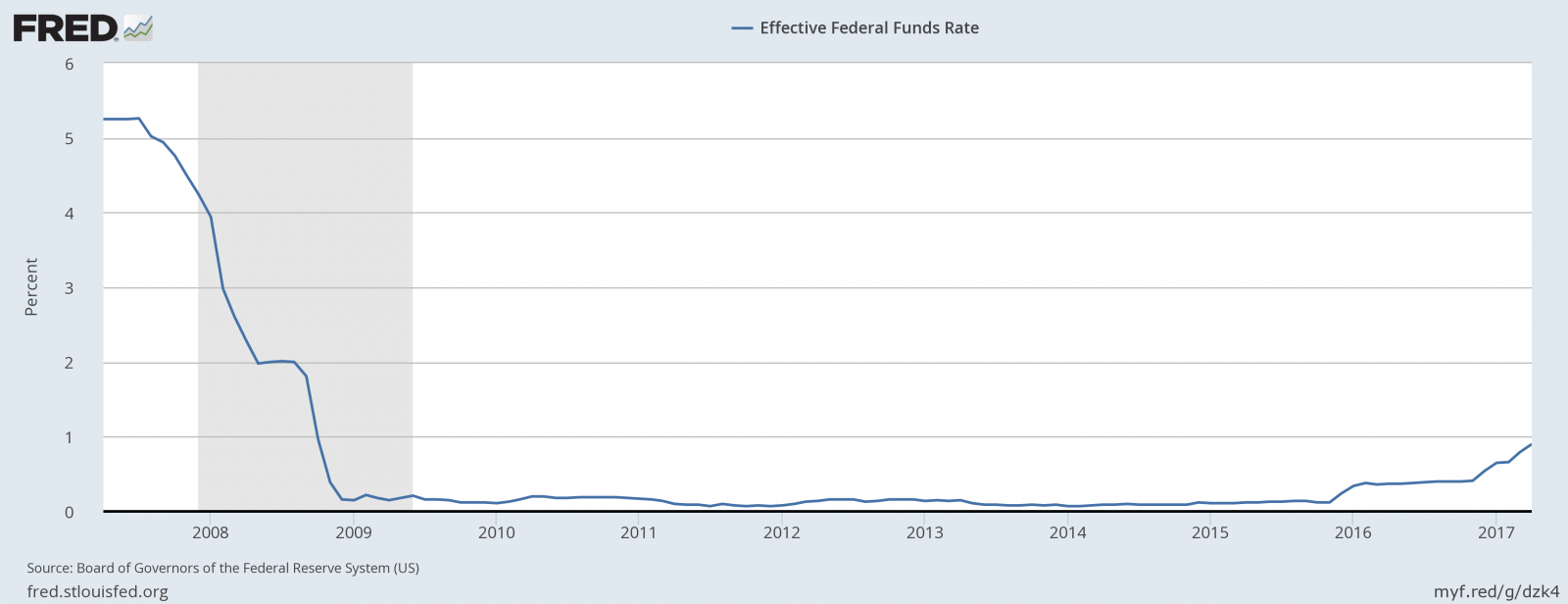
CD rates on terms of 1 and 2 years were very constantly low for many years from 2009 to 2015 as the Fed Funds rate was held at zero following the great recession. Rates on longer term CDs were occasionally more interesting during this period (depending more heavily on the level and direction of the US Treasury Bond).

The US Federal Reserve’s action towards normalizing interest rates has been painfully slow (resulting from Brexit, European financial instability, etc.), and CD rates have remained at levels that are very low by historical norms. However, we have seen CD rates rise in 2016 and 2017 as the Federal Reserve has begun to slowly raise the Fed Funds rate.

Are CD rates going up or down? When are they expected to rise?

If the Federal Reserve accelerates its plan to raise the Fed Funds rate or if global economic developments were to cause US treasury rates to rise, we would quickly see higher CD rates. However, the global economic environment is uncertain with European long-term interest rates being negative. Should the US also enter a recession and the US 10-year Treasury rate fall still further, it is possible that CD rates could fall further.

What is a good rate for a CD?

BestCashCow lists the best CD rates available from online banks above, and the best rates from local banks and credit unions. A good rate is the best rate that you can find at an FDIC or NCUA-insured institution, provided that it compensates you adequately over the best savings rates for the liquidity that you are giving up. Only you can determine based on your own personal circumstances whether that is a good CD rate for you. BestCashCow’s Savings & CD Calculator can help you to understand how much more interest a CD can generate over a savings account.

Is there an advantage to a 12-Month Certificate of Deposit over Online Savings Accounts?

At any moment in time, there is ordinarily a premium to an online 12-month CD rate over an online savings rate. The table below demonstrates the spread between the two over the last several years. Whether it makes sense for you to take advantage of these higher rates in the 12-month rate depends on your own need for liquidity and your view on whether and how fast savings rates will rise.


What are the advantages of online one-year CDs?

  • Funds deposited in FDIC banks and within insurance limits are protected by the full faith and credit of the United States government.
  • CDs provide a predictable, set rate of return.
  • The CD can be opened from the comfort of your house.
  • The CDs are generally available to any resident of the United States.

What are the disadvantages of one year CDs?

  • One year CDs pay interest rates that are just above the leading rates offered on online and branch-based savings and money market accounts. There is a very slight premium for having the money locked up for one year. Your own circumstances and tax rate will help you to determine if that premium provides adequate compensation to you for your loss of liquidity.
  • The deposited money is committed for one year.
  • The account must be opened online and all inquiries must be conducted online or via the phone.
  • Depending on the bank, the opening and funding process can take several days to weeks although the bank generally locks the rate once the application has been received and approved.

All banks listed on BestCashCow are FDIC insured; BestCashCow.com strongly recommends that you stay within FDIC insurance limits and that if you are unsure of how the limits affect you, please visit the FDIC website.

To understand all of the income generating options available to a saver, please view the Income Generating Investments Comparison Chart.

PRODUCT INFORMATION

One-Year CD - Online Banks 2026

Certificates of Deposit (CDs) are offered by most banks in a variety of maturity dates. The 1-year rates in the table above are listed in descending order based on Annual Percentage Yield (“APY”) which is the rate of return that you will earn, when adjusted for compounding, over a 12 month period, and the way in which banks are required by US banking regulations to advertise their CD rates.

A certificate of deposit represents a time commitment between a depositor (someone who has money to put in the bank) and a bank. The depositor agrees to leave a specified amount of money in the bank for a set period of time. The bank agrees to keep the money safe and to provide a fixed rate of return.

A 1-year CD has a very brief time commitment and can also generate a rate of return above the prevailing savings rate. Therefore, many people use 1-year CDs to slightly augment their rates of return over savings with only slightly more risk than they would have if they were entirely in savings accounts and money market accounts.

FDIC Insurance

Provided the bank is FDIC-insured and the deposit amount is within FDIC limits, the principal is also secured by an agency of the United States federal government against loss. Further information about FDIC insurance is found in this article and if you have specific questions about your own circumstances you should use the FDIC’s Electronic Deposit Insurance Estimator.

CD Risk

The principal of a CD is safe and insured as long as the deposit amount is FDIC limits. Interest that accrues and is paid or deposited to the principal also is safe as long as the total balance remains within FDIC limits.

A CD however bears two significant risks:

  • Liquidity risk

    If you think you may need access to your principal during the period of the time commitment for a major purchase or an unforeseen expense, CDs are generally not a good place to store money. The terms of most CDs outline the penalty that will be assessed in order to access your capital. This penalty is usually assessed in terms of time periods. For example, a common penalty on a 1-year CD is 3 months, although you should always check this carefully in the terms and conditions before opening a CD as it could be longer. Banks and credit unions are not obliged to offer an early withdrawal penalty, and may change or remove or even refuse to honor the early withdrawal penalty in their paperwork. For further details, please read this article. BestCashCow never recommends a strategy involving the purchase of a CD when you have a high likelihood that you will need your capital.
  • Inflation risk

    Since CDs are considered a very safe investment when you stay within FDIC and NCUA-limits, they often do not pay much over the anticipated rate of inflation, and can often pay under this rate. Were interest rates to rise (or the inflation rates to rise), the real or inflation -adjusted value of your CD can drop over time, especially when you factor in the tax consequences of ownership of a CD. In the event of rates rising, you may be able to use the early withdrawal penalty to get your principal but for the reasons mentioned above, BestCashCow does not recommend relying on such a strategy.

Be sure to think about how CDs fit into your overall portfolio objectives.

CD Laddering

An effective strategy used by many to bolster their savings strategy is to own CDs with various maturities. In other words, a depositor with $400,000 and put $100,000 in a 3 month CD, $100,000 in a 6 month CD, $100,000 in a 9 month CD and $100,000 in a one-year CD, then your liquidity risk in highly diminished because you are always near maturity on one of your CDs. (Note that no more than 2 of these CDs should be at the same bank in order to avoid exceeding FDIC limits).

The reality is that we are in a very low interest rate environment, and any CD with a maturity of less than 1 year is going to pay below, perhaps well below, the prevailing rates in the leading online savings accounts or at brick-and-mortar banks. Therefore, the strategy outlined above would be largely absurd in the current environment.

A laddering strategy that would make more sense for the same depositor who might otherwise hold $400,000 in cash would be to put $100,000 in a one year CD every three months. Liquidity risk in the same way is diminished as the depositor is never more than 3 months from maturity, yet the depositor is picking up some small improvement over the best savings rates than where all of his money to be in cash.

Laddering strategies can also involve longer term CDs, but one that involves terms as little as 1 year can improve on the savings rates with minimal impairment to your liquidity.

More information on CD laddering is available in this article.

How Interest is Paid

The method of distributing the interest earned on a CD varies by bank. Some banks pay interest monthly, other semi-annually, and others at the maturity of the CD. In general, online banks pay the interest electronically either by adding it to the principal balance or with an ACH transfer back to the depositor's primary linked checking account. Other online banks may pay via a check in the mail.

Interest Rate

Currently, the most competitive banks offer 1-year rates that are slightly above the top online savings and money market rates. Depositors need to decide if they want the fixed rate of the CD or the flexibility of the savings account (savings accounts do not come with any term time requirements).

In a rising rate environment, it is generally better to keep money flexible and liquid and put it into either short term CDs or savings or money market accounts. In a falling rate environment, it is generally better to lock the rate using a CD or some other fixed rate investment. In a stable rate environment, you may be able to collect a small premium in exchange for your loss of liquidity.

Online banks generally offer CDs available to residents of any of the 50 states. The CD must be opened online and funded either by online transfer or by mail.

Summary: Today's Highest Online CD Rates by Term - November 2026

Bank Institution Product Term Interest Rate (APY)
North American Savings Bank 1-Year 4.70% APY with $100,000 minimum
BTG Pactual Bank 1-Year 4.65% APY with $500 minimum
Popular Direct 1-Year 4.60% APY with $10,000 minimum
BTG Pactual Bank 3-Year 4.85% APY with $500 minimum
Popular Direct 3-Year 4.85% APY with $10,000 minimum
Synchrony Bank 3-Year 4.75% APY with no minimum
Popular Direct 5-Year 5.00% APY with $10,000 minimum
BTG Pactual Bank 5-Year 4.85% APY with $500 minimum
Synchrony Bank 5-Year 4.80% APY with no minimum

What to Look for in an Online CD Account:

FDIC and NCUA Insurance - In order to secure the viability of the US banking system, the Federal government provides insurance to a maximum amount of $250,000 per individual per institution (or $500,000 for joint account holders). This insurance is provided to banks through the FDIC and to credit unions through the NCUA. All banks listed on BestCashCow are FDIC insured; most, but not all, credit unions listed on BestCashCow are NCUA insured. Ordinarily, all deposits (CDs, Checking, Savings Accounts) held in the same type of ownership are added together and insured to $250,000, funds held in different types of ownership (Individual, Joint, Trust, Retirement) may fall under separate insurance provisions. In order to determine if your financial institution is insured and to ascertain your coverage limits, please visit - as appropriate - either FDIC.gov and use the BankFind functionality or NCUA.gov and use the Share Insurance Toolkit. We recommend that you deposit funds in only FDIC and NCUA insured institutions and that you do not exceed coverage limits.

Minimum Deposit - There is such competition for your money that the best CD rates are often available for sums as little as $500.

Term and CD Rates- Three month and six month certificates of deposit rates do not dramatically exceed those in online savings and money market accounts, and money market funds. Moreover, investors in states with higher state tax, such as New York and California, in an ordinary environment (not 2011) will perform equally well in a three-month US Treasury Bond or pre-refunded municipal bonds after they account for the fact that interest produced on those products are tax advantaged.

Generally, longer the CD term, the higher the CD rate. In general, the term you choose depends on how long you want to tie up your funds and also what you think will happen to interest rates.

Interest rates will fall. Then it is better to put money into longer-term CDs to maintain the high rate as long as possible.

Interest rates will rise. Put money into short term CDs. By keeping your cash more liquid, you can re-invest it as rates go up.

Interest rates will remain flat. In this case, going for longer-term CDs will help you maximize your interest income.

Learn more about getting the best CD rates.

Avoiding CD Pitfalls:

Early Withdrawal - Any certificate of deposit will bear substantial penalties for early withdrawal, if it is even allowed. Ordinarily, the penalty for early withdrawal will be a loss of all of your accrued interest, but there are certain circumstances where banks will also assess penalties that will result in a loss of some of your principal.

Recent Articles


What to Look for in A Certificate of Deposit

Before you even consider any CD (as with any savings account) be sure that you are dealing with an FDIC-insured bank - In order to secure the viability of the US banking system, the Federal Deposit Insurance Corporation (FDIC), an independent agency of the federal government, provides insurance in each qualified bank account for each qualified institution. Each depositor's insurance is provided to a maximum amount of $250,000 in each class of ownership.

While all deposits (CDs, Checking, Savings) held in the same type of ownership are added together and insured to up to the maximum amount, funds held in different classes of ownership (Individual, Joint, Trust, Retirement) may fall under separate FDIC insurance provisions. Please visit the FDIC's website to determine if your financial institution is insured and use its "ask Edie" program to determine your coverage limits.

We recommend that you deposit savings in only FDIC insured institutions and that you do not exceed FDIC coverage limits. Additionally, some major financial institutions claim that deposits over the single account FDIC insurance limits are insured because the financial institution divides your deposits between several separately chartered financial institutions; however, most of these claims have not been tested in the event of a bank failure.

You can check the best online rates here, but also check the best local rates and credit union rates.

You should also compare rates for different deposit terms (eg. 1-year versus 3-year versus 5-year rates). Except during periods rate expectations lead to an inverted yield curve, you will generally earn a higher yield with a longer term CD.

All banks listed on BestCashCow.com are FDIC-insured. All FCUs listed on BestCashCow.com are insured by the NCUA.

CDs, unlike savings accounts, are not completely liquid. Particularly, most certificates of deposit bear substantial penalties for early withdrawal, if it is even allowed. Ordinarily, the penalty for early withdrawal wil be a loss of accrued interest, but certain banks may also assess penalties that will result in a loss of some of your principal, especially if you withdraw you CD immediately after setting it up.


65 Questions to Ask before Choosing a CD

Rate information contained on this page may have changed. Please find latest cd rates.

Money


I. CD Basics

1. What are Certificates of Deposit (CDs)?

CDs, often also called time deposits, are a savings vehicle similar to a savings or money market account, but also involve a contract between the depositor and the financial institution. This contract sets a guaranteed rate (instead of variable one) in return for the depositor’s commitment to keep the money deposited until a specified date (the maturity date).

2. What are advantages of certificates of deposit compared to a savings account?

The advantage of a CD is that your interest rate is locked for the term of the CD. As a depositor in a CD, you do not run the risk that savings rates may fall. You often get a premium in your return rate for agreeing to keep your money tied up in a CD until its maturity.

3. How do CDs function and how can I take advantage of them?

As a depositor, you need to understand that when you purchase a CD, you are contracting to receive a fixed rate of return in consideration for maintaining your principal in an account until a given date. You can take advantage of CDs by earning a higher rate of return for your cash by contractually agreeing to have it locked up.

4. To what extent is a CD's interest rate guaranteed?

To the extent that the bank or credit union remains a going concern, it is bound by the contracts that it enters, and since a CD is a contract to pay the interest rate until maturity, it is bound to pay at that rate until a fixed date.

5. Are the funds in certificates of deposit insured?

Yes, just like savings accounts, the fund in certificates of deposit in FDIC - insured or NCUA - insured institutions are insured so long as you remain within relevant insurance limits. BestCashCow lists only banks that are FDIC insured. Some of the credit unions listed on BestCashCow pages are state chartered and not federally chartered. If a credit union does not have the word “federal” in its title you should click on its name in the BestCashCow rate tables to be taken to its informational page where you will see whether it is NCUA-insured. While BestCashCow lists certain credit unions that are not insured by, or regulated by, the National Credit Union Administration, we strongly recommend that you open CDs or time deposits only with NCUA-insured (or FDIC-insured) institutions.

6. How safe are CDs?

CDs are as safe as savings and money market accounts, but you should always stay within FDIC or NCUA insurance limits (within $250,000 for each class of ownership). In other words, if you have less than $250,000 between CDs, savings or money market funds and other instruments at a given bank or credit union, then you are protected.

7. Who should invest in CDs?

Everyone is eligible to purchase CDs. Savings and CDs make up a healthy part of any balanced portfolio, especially following the stock market crash in 2001 and the financial crisis in 2008-2009. Your own risk tolerance levels and personal situation determine the appropriate allocation to savings and CDs. Within this broad category, CDs can and should play an important role.

8. Is a CD better than a high-interest bank account?

No, not necessarily. CDs enable the consumer to lock in a rate for a given period of time and, as consideration for that assurance, the consumer surrenders liquidity and the right to benefit should savings rates rise. Since 2008, when interest rates began falling dramatically and until 2016, banks have consistently offered one-year CDs with rates better than the best online savings accounts. Over that time, as well, CDs have also consistently outperformed high-interest bank accounts. However, were interest rates to rise – and rise they will one day – the rates in savings accounts will rise, and CDs will not only lack the liquidity of regular savings accounts, but will also deliver inferior returns.
graph image

9. I think interest rates are going to rise quickly over the coming months. Should I still purchase CDs?

No. You should keep the entire allocation of your portfolio dedicated to savings and CDs in savings accounts and consider purchasing CDs again when you feel rates have stabilized at a higher level.

10. I think interest rates are going to rise slowly over the coming years. Should I still purchase CDs?

Short-term CDs could be an appropriate way to increase yield in some of the money that you have allotted to savings and CDs. With the best savings rates around 1.05% and the best one-year CDs around 1.25%, you can pick up a small but important increase in yield for some portion of your capital, and protect yourself from short-term volatility in rates.

11. Is a certificate of deposit a good place to keep emergency money?

No. Emergency money should be kept in an online savings account, or a branch savings account. Certificates of deposit are a good place to keep money for retirement or for a purchase or event that is more likely to be several to many years down the road. While CDs can usually be terminated early with payment of an early withdrawal penalty in the event of an emergency, it is important to recognize that banks or credit unions usually retain ultimate discretion as to whether to allow such a liquidation. Therefore, where you are uncertain of your immediate needs for cash, you should always err on the side of having more money in savings accounts than CDs.

12. I want a long-term savings account for my daughter or son. How should I proceed?

A good place to begin is by creating a custodial account in your son or daughter’s name with you as the custodian, and making annual gifts within federal annual gift tax exclusions to that account in each calendar year. (For 2016, the federal annual gift tax exclusion is $14,000.) If CDs rates are good, and they are better more often than not better than savings rates, CDs are an appropriate investment for this purpose. Please note that as long as you are the custodian, amounts in this account are included in your personal FDIC or NCUA insurance limit with that bank (ordinarily $250,000, see above).

13. How can I find out the best current CD rates?

The best current CD rates on online CDs are listed on this page. By adjusting the tabs on this page, you will see the rates for various durations. From the online CD rate tables, you can also adjust the tabs to review the best current rates offered by branch-based banks and credit unions where you live.

14. Is it better to open a certificate of deposit with more or less money? (Does the amount of my deposit affect my CD rate? How much money do I need to deposit to get the best rate?)

Many banks have graduated rate scales, offering a certain rate for a deposit of, say, $500, and a higher rate for deposits of, say, $50,000, and a still higher rate for a jumbo deposit ($100,000 or more). In such cases, you will get a higher rate for a larger deposit. In BestCashCow’s CD tables, only the highest rate tier is listed so, by using these tables, you can rest assured that you are identifying the highest rates available in the market.

15. Is there a difference between a credit union “time deposit” and a bank CD?

No. The terms are completely interchangeable by banks and federal credit unions. A certificate of deposit is technically a contract involving a time deposit. And, a time deposit is an agreement to deposit money over a given time period and there will always be a certificate memorializing the agreement.

16. How are CDs taxed?

Interest income earned from a CD is reported as interest income on your 1099 in the year in which it accrues.

17. Are long-term certificates of deposit taxed at lower rates?

No, interest income from all CDs is reported in the year in which it accrues on your 1099 and is usually taxable as ordinary income on your state and federal returns.

18. Are there taxation differences between income from a credit union (CU) shares versus bank deposits (CDs)?

No, distributions from CU share certificates and time deposits are treated as current interest income, just like interest from bank savings and CD accounts.

II. Opening a CD Account

1. How do I open a CD account?

CD accounts are opened by filling out paperwork online or in a bank’s branch.

2. How can I make my initial deposit into my CD account?

Your initial deposit is usually best made through an ACH transfer from another financial institution where you have your money that is initiated by the bank where you are opening the CD. Most online banks provide for this service free of charge, provided that you enter your correspondent bank’s routing number and your account number as part of the application process. Usually, they bank selling CDs will make two small deposits into your account to test that it will work. You will need to log on to your correspondent bank account and then verify these deposits. While the two small deposits are usually sent instantly, the entire process of funding the CD can often take several days. Separately, you can usually mail a check (takes longer) or make an outbound wire transfer from another financial institution (that institution will likely charge you a wire transfer fee).

3. What happens if the APY changes by the time the funds get deposited into my CD account?

Most banks and all reputable online banks lock the rate when the paperwork is completed. When you use an online bank and direct it to draw funds by ACH from a correspondent bank, the process should be considered complete and the maturity date set at the moment you complete the application, even if the bank doesn’t complete the ACH process for several days thereafter. If a bank seeks to change your rate, you should challenge them, and, if necessary, report the matter to relevant state consumer protection agencies.

4. Are there fees for opening a CD?

No, not ordinarily. Any bank that attempts to charge you an origination fee for opening a CD is one to be avoided.

5. Will I receive confirmation and additional details after opening my Online CD?

You should receive confirmation either by mail or by email.

6. Are there monthly maintenance fees for CDs?

No, you should not pay monthly maintenance fees for CDs. Any bank or custodial account that seeks to charge you a monthly maintenance fee for a CD should be avoided.

III. CD Purchase Strategy and Pitfalls

1. Is there a CD that allows additional contributions? (Can I add funds to my CD account?)

In the last few years, CIT Bank and others have offered products that allow “topping up” (adding one or two additional contributions to the CD over the course of the lifetime of the CD). These offerings, however, are very rare. Ordinarily, you can only add to the principal of a regular CD at maturity or within the grace period immediately following maturity.

2. Are there CD accounts that I can continually deposit money into on a monthly basis?

CDs are contracts and could presumably have any terms so long as they are not illegal or void as public policy. Nonetheless, there are only a few major banks that currently allow regular, continual deposits into CD accounts. More common, but still rare, are CDs which allow “topping up”, or adding to the balance, one or two times during the term of the CD.

3. What is a bump-up CD?

A Bump-up CD, or a “raise-your-rate CD” is a product that allows you to increase your rate, often once or twice, during the course of the CD, should interest rates rise. These products often carry a lower rate than CDs with comparable maturities (even those with comparable maturities from the same bank). Although these products are not regularly offered, in 2013, bump-up CDs were offered by CIT Bank, by Ally Bank and by Digital Credit Union. Since rates have stayed at very low levels, depositors in these products would have outperformed savings accounts over that time. But, the protection that they bought through these products against rising interest rates would have been unnecessary and they would have performed better in those same banks’ non-bump-up products. BestCashCow analyzed these protects at that time here.

4. How do I invest in long-term CDs without losing liquidity?

Since the purchase of a CD or time deposit involves entering into an contract agreement for a fixed interest rate (usually a higher interest rate) where the depositor is agreeing to keep money there on deposit until a given maturity date, CDs by their very nature involve the impairment of liquidity. That is the one thing you are giving up – liquidity for the life of the CD contract. There are, however, certain investment strategies that can limit the loss of liquidity that you incur, and the most common of those is CD laddering.

5. What is CD laddering?

CD laddering is, quite simply, developing a strategy of having multiple CD, each with different maturity dates, so that you can take advantage of rates better than the savings or money market rate while having CDs that mature on a regular basis, from short to longer ter. This way, one will always have access to liquidity.

In an ordinary environment (one with stable interest rates or declining interest rates), a depositor could begin a CD ladder by buying a variety of CDs of different maturities ranging from one-year (or even six-months) to five-years. Then, the depositor can distribute additional deposits in his or her CD ladder, by initiating new deposits towards the longer end as CDs mature.

In 2017, however, we are still not in an ordinary environment. Rates have been held at very low levels for a long period of time, and the Fed Chairwoman, Janet Yellin, has indicated (and reiterated) a desire to raise rates. Still with the best savings rates at or near 1% and the outside possibility of an external event driving rates, a modified CD laddering strategy involving only 1-year CDs can be put in place to provide some protection and minimal downside. That strategy would involve identifying the amount of a depositor’s savings and CD capital that can be assigned to CDs (leaving an emergency fund in savings) and then purchasing a 1-year CD with one-quarter of that money every 3 months. At the time when you become fully invested in 9 months, you will always be 3 months from any CD maturity and reset. By purchasing only those CDs that include a three - month early termination fee, this strategy can provide a relatively protective strategy against rising rates.

6. How can I maximize interest income on a CD?

You maximize interest income on a CD by thinking strategically about the money you are unlikely to need over a particular period or periods of time and then reviewing BestCashCow’s list of the best online, local and credit union rates. After you figure out what the time period is, you make a determination of where you feel interest rates are likely go and make a separate determination as to your own risk tolerance regarding the movement in interest rates. You should always err on the side of the shortest term products that will exceed the current savings rates if you feel rates are likely to rise over the intermediate term. As of this writing the best savings rates are around 1% and one-year CDs are offering around 1.25%. A conservative depositor who has more cash than needed in an emergency, and who believes rates are likely to rise, can maximize interest income by moving a specific amount of money to one-year CDs.

7. Can I add beneficiaries to my Online CD Account?

Some banks allow you to identify a beneficiary when you open a CD (or later), while others do not. Sallie Mae Bank, for example, allows you to identify a beneficiary, either at opening or later. Some legal commentators have suggested that identifying a beneficiary can enable the CD to avoid becoming part of probate should you die before maturity, but applicable probate rules are always going to be state-specific. If you engage in proper estate planning, there is nothing that can be accomplished by identifying a beneficiary at the time of purchase of a CD that cannot otherwise be accomplished through a testamentary document or a contract. Always consult with appropriate tax, accounting and legal professionals.

8. How can a certificate of deposit bypass probate?

Depending on the state in which your estate is entered into probate, a CD may bypass probate if a beneficiary is indicated when the CD is initiated. As noted, bank processes do not always allow the designation of a beneficiary when a CD is originated (for example, Sallie Mae allows designating a beneficiary, Colorado Federal Savings Bank does not). There may be other ways to bypass probate, and you should always consult your accountants and tax attorneys on such estate matters.

IV. CD Ownership and Things to Consider

1. How is interest credited in a CD?

Ordinarily, interest is credited monthly (but not paid out) on CDs with online banks. CDs opened at brick-and-mortar banks and credit unions may be paid out monthly or quarterly, depending on the general convention followed by the specific bank. Regardless of the frequency of interest credits, all banks are required to indicate the APY rates on CD products, so you should always compare products by APY rate.

2. Can I receive monthly statements on my CD account?

Most banks deliver either paper statements or electronic statements monthly.

3. Can I transfer money between my Online CD and other accounts?

You can transfer some or all of your CD principal from your online CD at maturity and before the grace period ends (at which point it usually automatically renews if you do nothing). At that point, you can also add to the principal in your CD by transferring money from other accounts. If you need access to your principal in your online CD prior to maturity, it is ordinarily only accessible with the payment of an early withdrawal penalty. Although rare, banks often retain the right to deny such early withdrawals so you should not invest in CDs if you think you might need the capital before maturity.

4. Can I open Retirement CDs? Can I buy a CD inside an IRA or 401k?

Yes, many, not most, banks allow CD purchases within an IRA or 401k account or program. Banks sometimes require additional paperwork. Transferring a CD from one held in your own name to an IRA or 401k is ordinarily not possible, and can result in difficult tax consequences, and should not be attempted without consultation with tax and legal professionals.

5. Can I give a certificate of deposit as a gift?

Yes, but just like any monetary gift, a gift of a CD has gift tax consequences for which you may need to involve an accountant to declare and for which you may owe gift tax consequences in the year in which it is bestowed.

6. Can a certificate of deposit be used as collateral for a mortgage?

Some lenders allow a CD to be used as collateral for a mortgage.

7. Would a mortgage lender consider savings in CDs to be as good as cash?

Yes, virtually all lenders will treat a CD as a liquid asset when determining your asset base.

8. Can purchasing a certificate of deposit improve my credit score?

No, there is no indication that the purchase of a CD improves your credit score.

9. How can I verify the interest rate my account is earning?

You can verify the interest rate that your account is earning by logging into your account online or looking at your most recent bank statement (either online or one mailed to you). If you are not able to log in or find your statement, you can call or visit the bank and inquire.

10. How can I calculate interest on a certificate of deposit?

Banks are required by law to disclose the annual percentage yield (APY) for savings and CD accounts. They may also disclose an annual percentage rate (APR) that will be lower. APY is the yield that you will earn over the course of a calendar year (be that from January 1 to January 1, or any period) and is more than the APR. $100,000 deposited into a CD on March 17 at 1.20% APY will have produced a total of $1,200 in interest by the following March 17. However, the APY rate includes a compounding factor of interest in later payment periods on the interest earned in earlier periods (the real rate of interest). The APR rate will be closer to 1.18% or 1.19%. Therefore, if the CD interest compounds monthly, you will see an interest payment credited in the first few months that is slightly less than $100 a month, and slightly more than $100 a month in later months (as you will be earning interest of the interest you have received). If you get a CD that does not compound interest, but that pays it out, you will never see a monthly interest payment of $100.

11. How does the APY get applied on a CD that is less than one year?

It doesn’t. APY is a term that assumes receipt of the applicable APR rate over the course of the year with compounding interest. You will not see the APY rate if you do not renew, say, a 6 month CD at least once at the current rate, just as you will not see the APY if your savings rate falls, even though it was listed as a certain APY rate on the date you opened the account. If you are opening a CD for a term of less than a year, you can still use the APY rate for comparison purposes.

12. Can I withdraw money from my Online CD?

When you purchase a CD, you can often indicate if you want the interest to accrue or by paid out on interest payment dates (interest payment dates are usually monthly). If you determine that you want interest to be paid out monthly, you will receive a check or other form of payment each month, but your CD balance will remain the same (if you choose to have it accrued, your CD balance will increase each month).

Otherwise, to withdraw money, you will need to terminate the CD, in whole or in part, for which you will have to pay an early termination fee (see below).

V. Early Termination of a CD

1. What if I need my money from a CD? Are there penalties for canceling a certificate of deposit?

Yes, there are early termination fees for ending a CD before maturity. These fees are disclosed by the bank or credit union in its contractual terms and conditions at the time the CD is originated and you should not purchase a CD without understanding these fees. Often, banks retain the right in the terms and conditions to deny early termination, although it is especially rare that a bank will not allow early termination with the payment or deduction of the fee.

2. How are early termination fees calculated?

Early termination fees are expressed in terms of months of interest. An acceptable early termination fee for a CD of one year or less is 3 months’ interest. Early termination fees for CDs of 18 months or longer is often between 6 months and 1 year of interest. Early termination fees can cause you to lose not only interest but also principal if you terminate a CD in a very early stage of the CD. Banks routinely waive early termination fees in the event of death or adjudged incompetence of the account holder.

More information on early termination fees can be found in this article.

3. What if the customer needs to withdraw some of the CD amount or the entire amount?

There is actually no standard practice on this, and banks and credit unions address it slightly differently in their account agreements. Many banks have stated policies that the entire CD must be terminated early, with payment of the early termination fee calculated on the entire principal balance, in order to extract any capital. However, banks are staffed by rational people who want to continue to earn your business, and adjustments can me made to contracts where doing so is in all parties’ interests. Therefore, if you desperately need, say, $20,000 from a CD with a $200,000 balance, you should contact the bank to see if it will allow you to withdraw that amount with payment of the fee on only that amount, leaving the $180,000 intact in the CD.

4. Is there a formula to decide when to break a Certificate of Deposit (CD)?

While money can usually be withdrawn early from CDs in an emergency, early withdrawal penalties can be onerous and there are no occasions where you should invest in CDs with the anticipation of withdrawing money early. (There are other websites that recommend that you do this. BestCashCow strongly recommends against it. It is a lousy investment strategy and unethical to enter into contracts with the anticipation at the outset of breaking them).

That having been said, it is possible that CD rates could go up so quickly and dramatically that even with the payment of the early withdrawal fee, you could find a new CD until your maturity that would provide you with a better return. Were such circumstance to arise, it would make sense to try to get the CD recast or to consider early termination with payment of the early withdrawal fee.

VI. CD Maturity, Renewal, Auto-Renewal and Other Options

1. What are my options when my CD matures?

At maturity, you can either renew the CD with the same bank for the same term, enter into a new CD with the bank for a different term, move your money to a savings account with the same bank, or cash out of the CD and remove your money from the bank. Most CDs will auto-renew for the same term if you do not contact the bank before the expiration of the grace period (usually 7 to 10 days after maturity) to indicate a desire to change products or remove your capital from the bank.

2. How do I transfer money out of my mature Online CD account? (How can a CD be cashed out?)

At maturity, there is a grace period (usually 7 or 10 days) before a CD automatically renews. At maturity or during the grace period is the best time to exit by moving the money to a savings or money market account at the same bank, or by transferring your money by ACH transfer to an account at another bank. Alternatively, you may request a check be mailed to you.

3. How soon will I receive the money after a CD matures?

Regardless of how often a CD pays interest, all interest owed should be paid on maturity.

4. When my CD account matures, will I be charged a fee to have the funds mailed to me?

You certainly shouldn’t be charged a fee for having a check mailed to you, especially since the bank makes interest on the float until you receive and deposit the check. You also should not be charged a fee for having the bank or credit union transfer the money back to you by ACH at another bank, and that will enable you to receive the funds and earn interest on them somewhere else more quickly.

5. Am I notified when my Online CD is maturing?

Some banks, perhaps most banks, will notify you when your CD is maturing. Following maturity, you usually have a defined period in which to opt-out of automatic renewal, and put the money in a savings or money market account with the same bank or ACH it out to a correspondent bank. That period varies from bank-to-bank, but an ordinary period is 7 to 10 days.

6. Does my Online CD automatically renew at maturity?

According to the terms and conditions, most CDs automatically renew at maturity if you do not opt out of automatic renewal during the grace period. Most online banks will allow you to call several days before maturity and indicate that you do not want automatically to renew. Most banks do not allow you to opt out of automatic renewal in the application, as they hope that you will “set in and forget it” and that the CD will renew.

7. Will I remember the maturity date of my CD?

Use a spreadsheet, financial software or an electronic agenda such as the calendar on your iPhone to note the maturity dates of your CDs, so that you have the opportunity to opt-out of automatic renewal if you will need your principal, or at least check on BestCashCow CD table to see the bank’s CD rates for the term that you will be renewing continue to be among the most competitive.

8. Can I add money to my maturing CD and change the term of the CD during the grace period (e.g., from 6-month to 12-month)?

Yes, ordinarily a bank allows you to add or remove money from a CD that is rolling over, or to set another CD duration during the grace period.

VI. CD Pitfalls and Important Things to Consider with CDs

1. Why are CDs important to banks?

The most important thing to understand about a CD is that it is a contract, and there are two parties to a contract, each seeking mutual benefit (and/or, to offset mutual risk). Just as the depositor seeks to lock in a rate of interest, banks seek the certainty of locking in a rate of interest that they will be paying for a defined period. Prior to the financial crisis in 2008 and 2009 which brought unprecedented low long-term rates, banks have always made money by lending at the long end of the interest rate curve (issuing mortgages, originating construction loans) and borrowing at the short end (savings). Since depositors have the right to draw on savings accounts at any time, banks can lock-in their own borrowing costs by issuing CDs. As a depositor, it is also important to recognize that banks rely on a large percentage of depositors purchasing short-term CDs and forgetting about them so that they are auto-renewed, rather than terminated.

2. Do yield curves affect CD rates?

Absolutely! The yield curve, and in particular the short and intermediate ends of the curve, are the single biggest determining factor in setting CD rates. Books have been written to explain this matter, but suffice it to say that they determine the rate which banks will want and need to pay in order to lock-in their own borrowing costs over various maturities. As interest rates go up, CD rates (and savings rates) go up, and as interest rates go down, CD rates (and savings rates) go down. US interest rates have been at unprecedented lows since 2009. If you believe that this represents a generational transformation, CDs may represent an opportunity for you. If, however, you believe that rates are more likely to quickly revert to a pre-2009 historical norm, you would want to avoid any CDs with maturities longer than a year.

Since yield curves are generally more volatile and unpredictable at the longer end, longer term CDs represent a larger gamble for both depositors and issuing banks.

3. What are brokered CDs?

Brokered CDs are those sold through a broker, but issued by an underlying bank and usually for the explicit purpose of being sold through a particular broker. In recent years, TD Ameritrade and other online brokerages online brokerage page have been aggressive sellers of brokered CDs on behalf of Amex and other banks. One such issue was discussed here.

BestCashCow strongly recommends against brokered CDs. First and most importantly, brokered CDs do not have early withdrawal terms and their fee structures are often less attractive than regular fees. For example, if you need your capital, you are forced to sell the CD through the broker. Since the broker usually does not make much of a market in the product after they initially syndicate it, you or your estate can take a serious loss trying to liquidate a brokered CDs. Second, you will always find a better rate on a CD purchased directly from a bank on BestCashCow’s rate tables rate tables. Third, these CDs are usually long-term in nature (longer than 5 years) and BestCashCow strongly recommends against purchasing CDs with maturities longer than 5 years. While not FDIC-insured, structured notes, as contrasted with brokered CDs, are more interesting long-term SEC regulated products which you can buy through traditional brokers and that offer much better returns than brokered CDs. These should be considered by those willing to live without early withdrawal terms. Check here!

4. How do I find a CD broker? How can I ensure that a CD sold by a brokerage is FDIC protected?

Any reputable broker is only going to sell brokered CDs that are FDIC-protected. However, if for example, you purchase a Chase-issued CD through TD Ameritrade, you need to consider whether that particular CD puts you over your $250,000 FDIC-insured total limit for all your assets with Chase. As noted above, BestCashCow strongly recommends that you avoid all brokered CD products. As this article explains, it is imperative that you avoid brokers you come upon on the internet, no matter what they purport to be selling.

5. If CDs have various rates of default, how can I pick a low-risk CD?

Banks have default risk, but CDs are fully insured by the FDIC or NCUA so long as you stay with within established insurance limits. As long as you have less than $250,000 within each class of ownership (not asset class, but class of ownership) at a financial institution, you do not need to worry about default risk. BestCashCow provides more information on FDIC and NCUA insurance in this article.

6. What will happen to my CD if the issuing bank collapses?

Were a bank or credit union to be seized by the FDIC or NCUA, you will receive your CD principal and any accrued interest, but the remaining term can be cancelled even if the FDIC’s action results in an immediate acquisition of the bank’s assets by another bank. The acquiring bank has some discretion as to which liabilities it wants to honor when the FDIC is involved. This, however, may be contrasted with a straight acquisition by another bank where the remaining term and rate is not impacted (the acquiring bank may not impair the obligations of the bank it has acquired).

7. Investing in foreign CDs, is it worth the risk?

No. Advertisements and direct contacts offering “fantastic” CD rates from banks in India or elsewhere that you have never heard of should be treated as spam and deleted. US investors should invest only in US banks and take advantage of FDIC and NCUA insurance. Likewise, foreign currency CDs offered by US banks should be avoided. In 2000 and 2001, tons of investors lost fortunes in foreign currency CDs at Everbank that neither the bank nor they understood. These investors lost significant amounts of their principal and, in some cases virtually everything, as the currencies on which they were based collapsed against the US dollar. There are tons of much better ways to take advantage of opportunities in foreign currencies and foreign markets involving much less risk to principal. Your CD accounts, like your savings accounts, should be reserved for money that you cannot afford to put at risk. US depositors who operate principally in US dollars should avoid foreign currency CDs and the banks that offer them.

8. Is a CD a security?

No, a CD is not a security under the 1933 Securities and Exchange Act because it is viewed as a bank deposit product, akin to a savings account with a time element. Some banks, such as Everbank, have used the loophole in the 1933 Act to offer instruments that involve a risk of principal while calling these instruments CDs (emerging market CDs, foreign currency CDs, precious metal CDs, interest rate-based CDs). BestCashCow strongly recommends that CD products involving a risk to principal be avoided.

9. What government agencies regulate CDs?

CDs are regulated like savings or other deposit accounts at financial institutions. The Federal Reserve’s Board of Governors overseas state-charted banks and trusts that belong to its system, and the Office of the Controller of the Currency regulates major financial institutions that have the words National or National Association after their names. The FDIC regulates all other banks and the National Credit Union Administration regulates all federally-charted credit unions. If you have any concern about a CD that you have purchased, your best recourse is often to direct your inquiry to relevant state regulators in the state where the selling institution is incorporated and state consumer protection agencies in your state of residence. As noted above, BestCashCow strongly recommends against brokered CDs, however, if you purchase a CD from a broker, you have the additional recourse of being able to file a complaint with the brokers’ regulators, including the SEC.


Brokerage Certificates of Deposit

Rate information contained on this page may have changed. Please find latest cd rates.

Although most people think that you can only buy CDs from a bank, brokerages also sell CDs and they may offer you some advantages.

Banks generally issue large blocks of CDs to brokerages, who then break the blocks up to re-sell to their customers. Since the brokerages purchase the CDs in large blocks, they may be able to negotiate higher rates than an individual customer can get from a bank. The brokerages generally re-sell the CDs to their customers without fees.

Brokerages re-sell these CDs without fees because they want to keep their clients money within the brokerage. When the CD expires, the money is still with them, and can be re-invested in stocks, bonds, or another product that they offer.

A Brokerage CD is usually FDIC insured by the original issuing bank.

For consumers, a brokerage CD offers the following benefits:

  • Convenience. The convenience of buying more than $100,000 in CDs from one location and keeping all of the money FDIC insured. A consumer could buy three $100,000 CDs from three different banks using one brokerage. Because the CDs were originated from three different banks, the full amount would be FDIC insured. These CDs are then housed in one place and not at three separate banks.
  • Potentially Higher Rates. Brokerage CDs generally pay above market rates because the brokerages have negotiating power with the banks
  • Liquidity. Brokerage CDs may be able to be resold before their maturity date (instead of redeemed), allowing you to withdraw your money without penalty. Depending on current interest rates, your CD may be worth more or less than what you paid for it. .

In addition to the advantages, we saw one huge disadvantage to brokered CDs in 2008, 2009 and 2010 as many banks went under and were acquired by other banks through FDIC-managed sales or transformations. CDs purchased directly with banks like IndyMac or Wachovia were transferred to CDs with the same terms from the acquiring / resulting institution. However, brokered CDs were ordinarily paid out on the date the bank ceased to exist. As we were in a falling interest rate environment, proceeds from brokered CDs could not be readily invested at the same rate.

In addition, brokerages often offer more exotic CD products. Below are some of the different types of CDs offered by brokerages:

Callable CD

Callable CDs usually offer a higher rate of interest because the issuer reserves the right to buy them back at some point in the future. For example, if interest rates drop, the issuing bank may decide that it can borrow money for less than it is paying on some of its CDs, and it may buy back those CDs. Most callable CDs come with at least a year of call protection.

If you want to lock your money in for a certain period of time, and believe interest rates are going to rise in the future, these may be good bets. You are effectively "selling" the call feature in return for which you will receive a higher rate of return.

Zero Coupon CD

Zero Coupon CDs do not pay interest over the term of the CD or have a coupon. Instead, you buy the CD for discount over its face value and when it matures you get the full face value. So, you might buy a 5-year, $20,000 CD for $15,000 and when the CD matures you would get the full $20,000.

The biggest disadvantage to so-called Zeros is that the income is taxed annually by the IRS. So you will need to pay taxes on the income you are earning without receiving the income until the maturity date. Zeros therefore are most effective when held in a tax-exempt account.

Secondaries

These are CDs that you can purchase from others on the secondary market. The prices of these CDs depend on the direction of interest rates, the credit worthiness of the issuing bank, and other competitive products.

Selling a Brokerage CD

If you plan on buying Brokerage CDs with the intent of selling them, then you should consider several factors.

1) What do you think will happen with interest rates? If interest rates drop, the value of your CD will drop with it.

2) The credit worthiness of the issuing bank. A large percentage of secondary market brokerage CDs are purchased by large institutions who only want CDs issued from highly rates banks, regardless of whether they are FDIC insured.

3) Ask the broker to check the value of similar issues on the secondary market.

In general, as with all cash equivalent investments, be sure to run the numbers and take into account the other benefits and drawbacks of the investment before making a decision. You should also talk to a certified investing professional who can help you evaluate your choices.